

Electrical Load Monitoring & Capacity Assessment
Bishop Thomas Grant School – London
Project Overview
XLR8 MEP Design Ltd was commissioned to undertake a detailed electrical load monitoring study at Bishop Thomas Grant School to establish true site demand and assess capacity for future electrification.
The project was driven by the need to validate available capacity and support potential integration of additional electrical loads.
Original Brief
As outlined in the initial appointment, the scope included:
- Installation of 3-phase load monitoring equipment at the main intake position
- Monitoring over a minimum 14-day period to capture representative usage
- Recording of:
- Voltage
- Current
- Power (kW / kVA)
- Power factor
- Frequency
- Identification of maximum demand and load profiles
- Production of a technical report with recommendations
Monitoring Approach
Monitoring equipment was installed on the incoming electrical supply, capturing half-hourly and interval data across all three phases.
This enabled:
- Accurate profiling of daily and weekly demand cycles
- Identification of peak loading events
- Assessment of phase balance and system behavior under load
Engineering Insight
A key technical finding was the presence of short-duration peak loads, which:
- Can approach or exceed protective device thresholds
- Do not represent sustained system loading
- Are often caused by coincident equipment start-up or plant cycling
This reinforces an important engineering principle:
Electrical systems should be assessed using real demand profiles, not worst-case assumptions alone.
Capacity Assessment
Based on the measured data:
- The site demonstrates available spare capacity within the existing supply
- However, integration of additional loads must consider:
- Peak coincidence
- Protection constraints
- Diversity factors
This is particularly relevant for:
- Heat pump installations
- EV charging
- Additional mechanical plant
Outcome
XLR8 MEP Design Ltd delivered a clear, data-driven engineering report which:
- Quantifies actual electrical demand
- Identifies system headroom
- Highlights risks associated with transient peaks
- Provides a robust basis for future design decisions
Project Value
This project demonstrates how measured data can unlock capacity that may otherwise be assumed unavailable.
In many existing buildings:
• Overly conservative assumptions lead to unnecessary upgrades
• Load monitoring provides a low-cost, high-value alternative
Data-led engineering reduces risk, improves design accuracy, and avoids unnecessary infrastructure expenditure
For any witness expert advice or reporting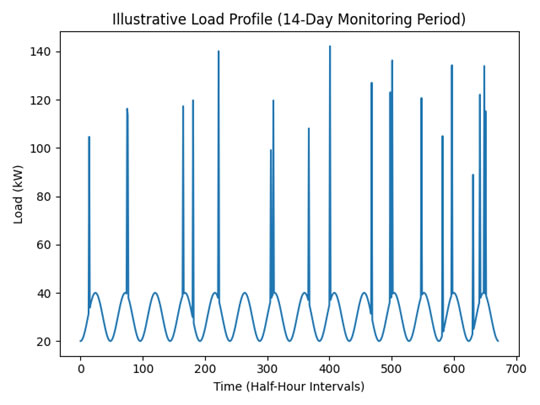


Get a MEP Design Quote
If you’re planning a self-build or residential development and want expert MEP design support with clear deliverables and commercial-level experience, we would be delighted to help.